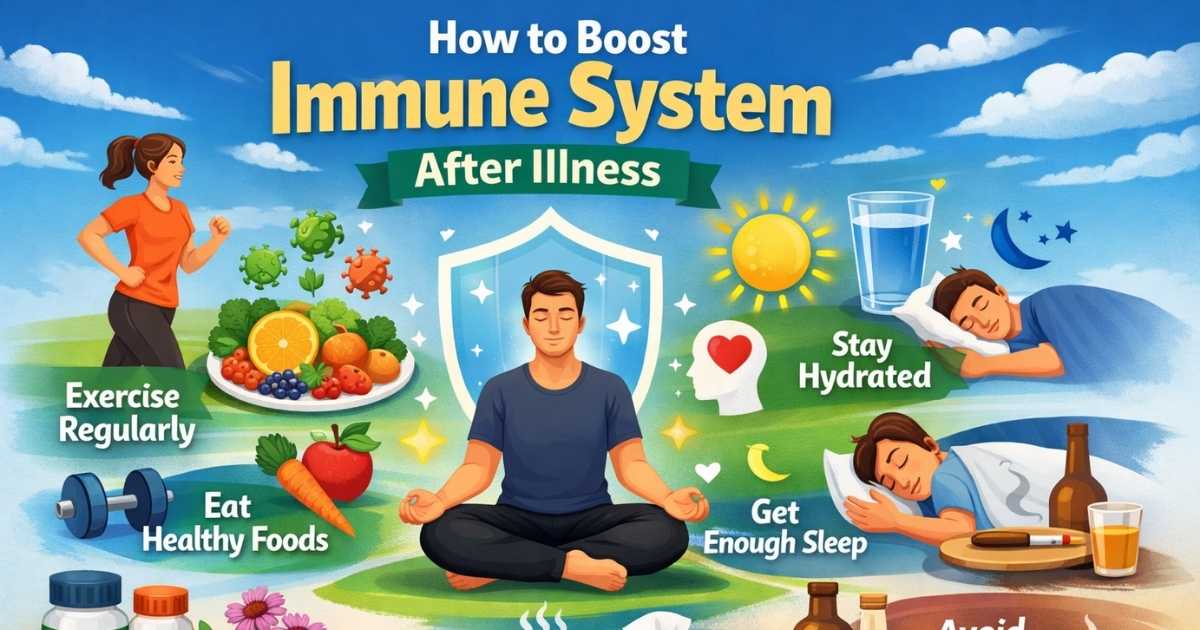
Recovering from an illness doesn’t always mean your body is fully back to normal. Even after symptoms disappear, your immune system may still be rebuilding strength. During infections, your body uses a huge amount of energy and nutrients to fight viruses or bacteria. That’s why many people feel weak, tired, or mentally drained for days or even weeks afterward.
Learning how to boost immune system after illness can help your body recover faster and reduce the risk of getting sick again. Simple habits like eating the right foods, sleeping well, and staying hydrated support immune system recovery and restore your body’s natural defenses.
Related Post: Is It Anxiety or Heart Problems? | Common Anxiety Symptoms
1. Eat Immune-Supportive Foods
Nutrition plays one of the biggest roles in helping your body recover after being sick. Your immune cells rely on nutrients such as vitamin C, vitamin D, zinc, and protein to rebuild strength and fight infections effectively.
Focus on immune system strengthening foods such as citrus fruits, berries, spinach, broccoli, eggs, fish, and lean meats. These foods provide essential immune system support nutrients that help repair tissues and promote antibody production. Fermented foods like yogurt, kimchi, and kefir also support gut health and immunity, which are closely connected.
Some of the best foods that boost immunity include:
- Citrus fruits (oranges, lemons, grapefruits)
- Bell peppers and leafy greens
- Garlic and ginger
- Yogurt and fermented foods
- Nuts and seeds
Adding these healing foods after illness to your diet regularly helps rebuild immune function naturally.
2. Stay Well Hydrated
Hydration is often overlooked during recovery, yet it’s critical for immune health. Water supports circulation, helps remove toxins, and keeps mucous membranes moist. These membranes act as an important barrier against viruses and bacteria.
Drinking enough fluids also helps restore energy after illness and prevents fatigue. Aim for at least 8–10 glasses of water daily, especially if you recently had a fever or viral infection.
Good hydration choices include:
- Water
- Herbal teas
- Bone broth or vegetable broth
- Fresh fruit-infused water
Maintaining proper hydration for immune health helps your body recover faster and keeps cells functioning properly.
3. Prioritize Sleep
Sleep is one of the most powerful tools for immune system recovery. While you sleep, your body releases proteins called cytokines that help fight infection and reduce inflammation.
Poor sleep can slow healing and weaken your immune response. Try to get 7–9 hours of quality sleep each night during recovery. A consistent bedtime routine also improves sleep and immune system recovery.
Helpful sleep tips include:
- Going to bed at the same time every night
- Avoiding screens before bedtime
- Keeping your room cool and dark
- Practicing relaxation techniques
Understanding how sleep helps immune system recovery can make a big difference in your overall healing process.
4. Move Gently
Exercise may seem difficult when you’re still recovering, but gentle movement can actually support healing. Light activity improves blood circulation, allowing immune cells to move efficiently throughout your body.
Start with low-impact activities such as stretching, yoga, or short walks outside. These simple exercises to boost immunity after sickness can improve mood, reduce stiffness, and help your body regain strength.
However, avoid intense workouts until your energy levels return. Your goal should be gradual movement rather than pushing your body too hard.
5. Manage Stress
Stress has a powerful effect on the immune system. When you’re stressed, your body releases cortisol, a hormone that can suppress immune function over time.
Managing stress is one of the most effective lifestyle habits to improve immune health. Simple relaxation practices help your body recover and maintain balance.
Try stress-reducing activities such as:
- Deep breathing exercises
- Meditation or mindfulness
- Spending time outdoors
- Talking with friends or family
These habits support natural ways to improve immunity and help your body regain stability after illness.
6. Consider Immune-Supporting Supplements
While whole foods should be your primary source of nutrients, supplements can sometimes help during recovery—especially if you have deficiencies.
Common vitamins for immune health include vitamin C, vitamin D, and zinc. These nutrients play an important role in immune cell function and tissue repair.
Some supplements often recommended for immune recovery include:
- Vitamin C
- Vitamin D
- Zinc
- Probiotics for immune support
- Herbal options like elderberry or echinacea
Many people also wonder what vitamins help immune system recover faster. Research suggests these nutrients may help shorten recovery time when combined with healthy habits.
Always speak with a healthcare professional before starting new supplements, especially if you’re recovering from a serious illness.
7. Limit Sugar and Processed Foods
Sugar and heavily processed foods can increase inflammation in the body. This can slow healing and interfere with immune system recovery.
Foods to limit include:
- Sugary drinks
- Candy and desserts
- Processed snacks
- Fast food
Instead, choose anti inflammatory foods for recovery such as vegetables, fruits, whole grains, and lean protein. These foods help support natural immune boosters and maintain balanced energy levels during recovery.
8. Get Some Sunshine and Fresh Air
Spending time outdoors has surprising health benefits. Sunlight helps your body produce vitamin D, which is essential for immune regulation.
Even 15–30 minutes outside each day can improve mood, reduce stress, and support immune function. Fresh air also helps regulate your body’s natural sleep cycle.
Regular outdoor time is one of the easiest immune boosting lifestyle habits you can build into your daily routine.
9. Take It Slow and Be Patient
One of the most important post illness recovery tips is simply giving your body time to heal. Many people rush back to work, exercise, or daily responsibilities too quickly.
However, your body may still be rebuilding strength after fighting an infection. Listening to your body’s signals helps prevent setbacks.
If you’re wondering how to regain strength after flu or viral infection, the key is gradual recovery. Rest when needed, maintain healthy habits, and allow your immune system time to fully restore itself.
Rebuild Your Defenses After Illness
Recovery doesn’t end when symptoms disappear. Your body continues working behind the scenes to repair tissues, balance hormones, and restore immune strength.
If you want to know how to boost immune system after illness, the best strategy is a combination of good nutrition, quality sleep, hydration, and stress management. These healthy habits help rebuild immune system naturally and reduce your risk of future infections.
By focusing on consistent self-care, you can recover faster and support long-term immune health.
Conclusion
Recovering from illness takes time, and your immune system needs proper support to return to full strength. Healthy foods, good sleep, hydration, gentle movement, and stress management all play important roles in healing.
Understanding how to boost immune system after illness helps you protect your body and regain energy more quickly. By adopting simple daily habits, you can strengthen immunity and build long-term resilience against infections.
FAQ’s
1. How long does it take to fully recover your immune system after illness?
Most people recover within one to three weeks, but recovery time varies depending on the illness and overall health.
2. Can supplements really help boost immunity?
Yes. Supplements like vitamin C, vitamin D, and zinc can support immune health, especially if you have nutrient deficiencies.
3. What foods are best for boosting immunity?
Fruits, vegetables, nuts, seeds, lean protein, and fermented foods are among the best foods that help immune system heal faster.
4. Is it normal to feel tired even after the illness has passed?
Yes. Many people ask, “why am I still tired after being sick?” Fatigue is common after infections because the body is still healing.
5. Should I exercise while recovering from illness?
Light activity like walking or stretching is usually safe, but intense exercise should wait until your energy fully returns.

Daniel Morgan is a health writer and wellness researcher dedicated to making evidence-based health information simple, practical, and actionable. With over six in health education and research, he specializes in translating complex medical topics into clear guidance readers can trust.