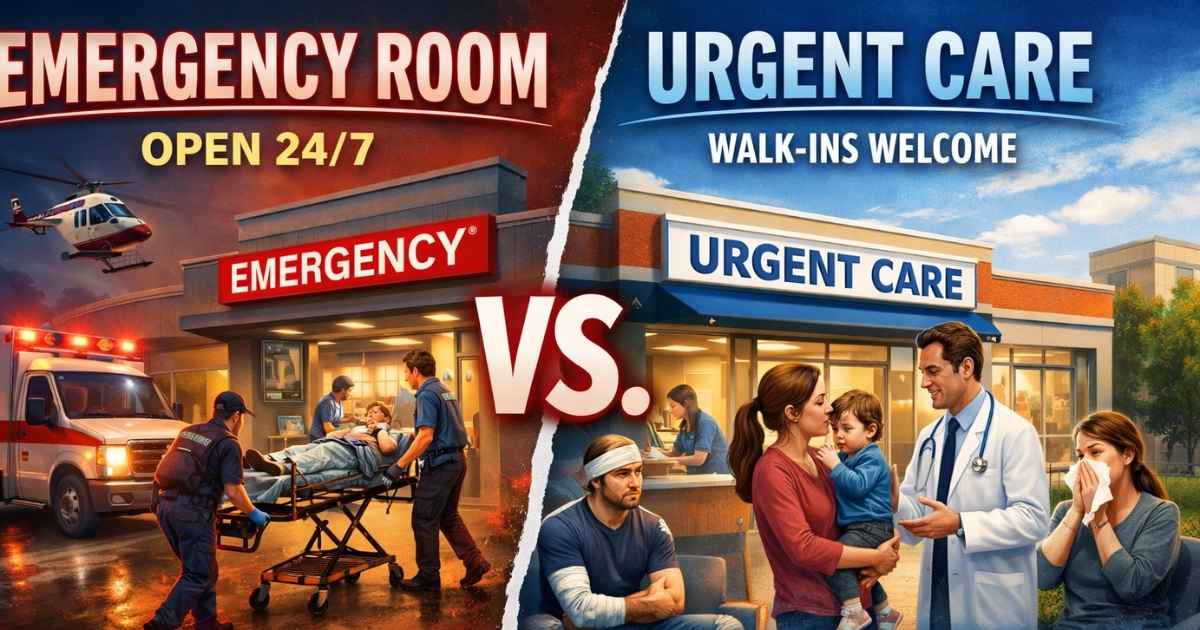
Medical problems don’t wait for a convenient moment. A sudden chest pain, a bad fall, or a high fever can leave you wondering where to go. Understanding When to Visit an Emergency Room vs. Urgent Care: A Quick Guide can save you time, money, and possibly your life.
Many people struggle with the difference between emergency room and urgent care. Some rush to the hospital for minor injuries treatment. Others delay critical care treatment because they underestimate serious symptoms. Let’s break it down clearly so you can make the right choice when it matters most.
Related Post: What the Difference Between Health and Wellness?
When to Go to the Emergency Room
Emergency rooms provide 24/7 emergency care for life-threatening conditions. A hospital emergency department has advanced diagnostic imaging, full lab capabilities, and specialists ready to act. If you need immediate medical attention and your condition could worsen quickly, the ER is the right place.
Go to the ER if you experience symptoms that require emergency care, such as crushing chest pain, severe breathing trouble, or sudden confusion. Wondering, “Is chest pain urgent care or ER?” If it feels intense, spreads to your arm or jaw, or comes with shortness of breath, call emergency medical services. Other signs you should go to the emergency room include uncontrolled bleeding, emergency room for severe abdominal pain, emergency care for breathing problems, or emergency room for stroke symptoms like slurred speech or facial drooping.
Serious trauma also belongs in the ER. If you’re asking when is a head injury an emergency, the answer is simple: loss of consciousness, repeated vomiting, seizures, or worsening headaches need urgent neurological evaluation. Open fractures, major burns, poisoning, overdose, and pregnancy complications fall into this category as well. The medical triage process ensures that the most critical patients receive care first.
When to Visit Urgent Care
Urgent care centers act as a walk-in medical clinic for non-life-threatening conditions. They offer same-day medical treatment and serve as a primary care alternative when your doctor isn’t available. If your condition is stable but uncomfortable, urgent care may be enough.
So what conditions does urgent care treat? Think minor cuts, sprains, urgent care for minor burns, or where to go for minor fractures without exposed bone. Many people ask, can urgent care treat broken bones? Yes, simple fractures and sprains can often be handled with X-rays and lab testing. You can also visit urgent care for fever in adults, urgent care for urinary tract infection, sinus infections, or urgent care for allergic reactions that don’t affect breathing.
Urgent care centers also provide acute illness care like bronchitis, mild asthma flare-ups, or food poisoning. They’re ideal for after-hours medical care when your doctor’s office is closed. Compared to a freestanding emergency room, urgent care typically handles outpatient medical services that don’t require complex monitoring or surgery.
Choosing the Right Care: Beyond Symptoms
Deciding where to go isn’t just about pain level. It’s about risk. If your condition could cause permanent damage without rapid intervention, choose emergency medical services. If it’s uncomfortable but stable, urgent care offers an efficient solution.
Many people search for when to go to ER instead of urgent care because symptoms can overlap. For example, mild abdominal discomfort may suit urgent care. However, emergency room for severe abdominal pain with fever or vomiting signals a possible surgical issue. Trust your instincts. If something feels seriously wrong, don’t gamble with your health.
Time Sensitivity: How Quickly Do You Need Care?
Time plays a huge role in When to Visit an Emergency Room vs. Urgent Care: A Quick Guide. Conditions like stroke or heart attack can cause permanent damage within minutes. In those cases, immediate medical attention isn’t optional. On the other hand, a sprained ankle or mild ear infection can usually wait for urgent medical evaluation without risking your long-term health.
Cost Considerations: ER vs. Urgent Care
The urgent care vs emergency room cost comparison often surprises people. The cost of emergency care is significantly higher because ERs operate with full staff, specialists, and advanced equipment around the clock. ER vs urgent care wait times can also vary depending on how busy the hospital is and how severe other cases are.
Urgent care visits are usually more affordable for minor issues. If you need short wait times for a simple infection or minor injury, urgent care may save both money and hours. However, never let cost stop you from seeking emergency care for breathing problems or other life-threatening symptoms.
Specialized vs. Generalized Care
ERs provide critical care treatment with access to surgeons, cardiologists, and advanced diagnostic imaging such as CT scans and MRIs. A hospital emergency department can stabilize complex trauma, internal bleeding, or severe infections.
Urgent care centers focus on outpatient medical services and routine X-rays and lab testing. They don’t have operating rooms or intensive care units. That’s the key difference between emergency room and urgent care when it comes to capabilities.
Making the Right Choice for Your Medical Needs
Understanding When to Visit an Emergency Room vs. Urgent Care: A Quick Guide empowers you to act quickly and confidently. If you’re unsure what qualifies as a medical emergency, ask yourself one question: could this condition threaten my life or long-term health if I wait?
For example, urgent care vs ER for pregnancy concerns depends on severity. Mild nausea may suit urgent care. Heavy bleeding or severe cramping requires emergency evaluation. When in doubt, choose safety over convenience. It’s better to be cautious than regret waiting too long.
Conclusion
Making the right healthcare decision isn’t always easy. Knowing When to Visit an Emergency Room vs. Urgent Care: A Quick Guide helps you respond calmly instead of reacting out of fear.
Remember, ERs handle life-threatening emergencies that demand immediate medical attention. Urgent care centers treat stable, non-life-threatening conditions efficiently and affordably. Listen to your body, assess the urgency, and choose the level of care that protects your health and peace of mind.

Daniel Morgan is a health writer and wellness researcher dedicated to making evidence-based health information simple, practical, and actionable. With over six in health education and research, he specializes in translating complex medical topics into clear guidance readers can trust.