
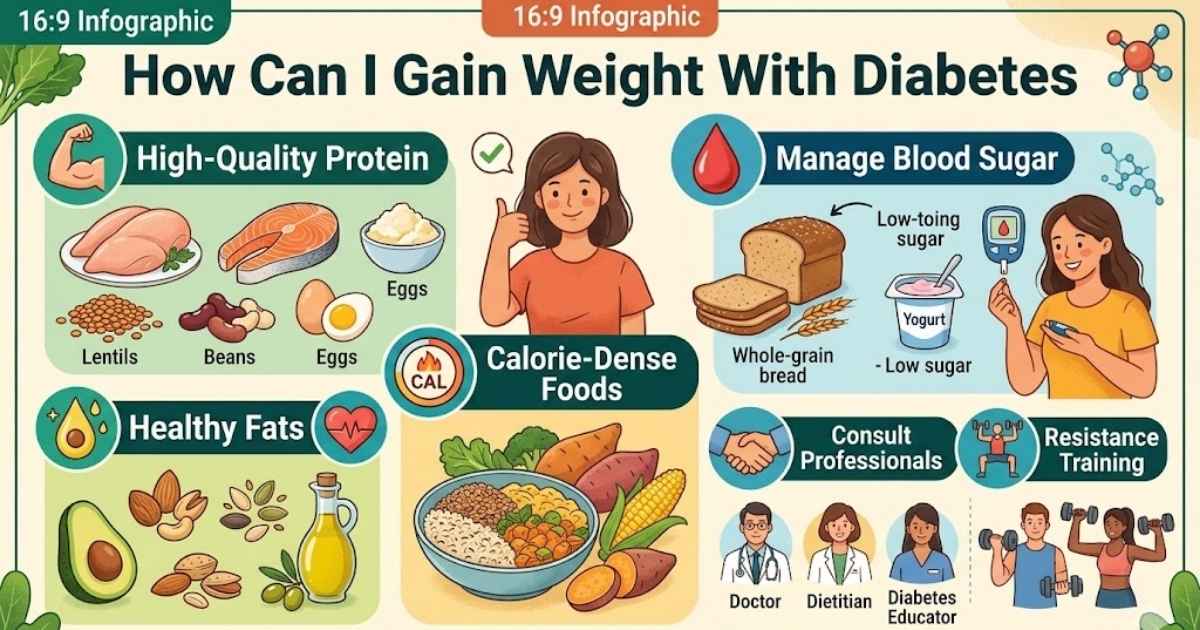
Gaining weight with diabetes can feel tricky, but it’s completely possible with the right plan. Many people assume that diabetes only involves losing weight or restricting calories, but some patients may need to How Can I Gain Weight With Diabetes. This is especially true for those who have experienced involuntary weight loss due to chronic illness, stress, or poor appetite. Maintaining a healthy weight helps you stay energetic, support your metabolism, and manage your diabetes more effectively.
Managing weight with diabetes requires balance. You can’t just eat high-calorie foods indiscriminately—spikes in blood sugar can cause more harm than good. Instead, the focus should be on nutrient-dense foods, healthy fats, lean proteins, and careful portion planning. With proper guidance and monitoring, you can gain weight safely while keeping your blood sugar stable.
Related Post: Can Smoking Cause Chest Pain? | Know the Health Risks
Why might you need to gain weight?
Diabetes can sometimes lead to involuntary weight loss, especially if blood sugar is poorly controlled or if another chronic illness is present. Losing too much weight can weaken your muscles, reduce energy levels, and make managing daily routines more difficult. In fact, underweight diabetics often struggle with appetite How Can I Gain Weight With Diabetes, fatigue, and nutrient deficiencies. This is why doctors may recommend a nutritional plan for underweight diabetics to restore healthy body weight.
Additionally, stress, depression, or complications from diabetes itself can lead to unintentional weight loss. When your body isn’t getting enough calories or nutrients, it can become harder to maintain blood sugar control. Gaining weight safely is essential not just for energy, but for overall diabetes management and long-term health.
How to gain weight for diabetes
The key to gaining weight as a diabetic is balancing calorie intake with nutrition. High-calorie foods alone, like sweets or refined carbs, may raise blood sugar without providing essential nutrients. Instead, focus on foods that offer vitamins, minerals, protein, and healthy fats. Strength training and light exercise can also help build muscle mass, stimulate appetite, and improve glucose control.
For diabetics, it’s important to coordinate your insulin or medication plan with your diet. Consuming balanced meals while avoiding sugar spikes ensures that weight gain is safe. You should aim for high-calorie foods without sugar spike, such as nuts, seeds, avocado, or whole grains, rather than processed or greasy options.
Diabetic diet to gain weight
Eating for diabetic weight gain requires a focus on nutrient-dense, calorie-rich foods. The right mix of proteins, fats, and complex carbohydrates can help you gain weight while keeping your blood sugar in check. Small, frequent meals are often easier for diabetics who struggle with appetite.
It’s also essential to include heart-healthy foods and avoid processed snacks. Whole grains, lean proteins, healthy oils, and full-fat dairy provide calories without excessive sugar. Pairing these foods with strength training or moderate exercise will help convert calories into muscle rather than fat.
Full-fat dairy products
Full-fat dairy is a great option for diabetics aiming to gain weight. Products like whole milk, unsweetened yogurt, and cheese provide vitamin D, calcium, and protein. Moderation is key, especially if cardiovascular issues exist. Incorporating these foods can contribute to healthy calorie intake without causing drastic blood sugar spikes.
Caffeine, alcohol, and low-calorie beverages
Caffeine, alcohol, and diet sodas should generally be limited. Alcohol provides empty calories and can affect digestion, while low-calorie beverages may suppress appetite. Instead, opt for water, milk, or fresh fruit juices with pulp. Smoothies made with healthy ingredients are also a good way to increase calories safely.
Chocolate and other snacks
Chocolate can be included cautiously, particularly for type 2 diabetics. Dark chocolate offers antioxidants and can satisfy cravings without large sugar spikes. Healthy snack options include Greek yogurt with granola, apple slices with peanut butter, or whole-grain toast with avocado. Avoid processed snacks that are high in sugar and unhealthy fats.
Vegetables and oils selection
Vegetables like broccoli, carrots, cabbage, and brussels sprouts provide nutrients and fiber without causing sugar spikes. Sprinkling healthy oils, such as extra virgin olive oil, avocado oil, or sesame oil, adds calories for weight gain. Homemade mayonnaise or nut-based dressings can also help increase healthy fat intake.
Higher-calorie foods
Some high-calorie, nutrient-rich foods that support diabetic weight gain include:
- Nuts and seeds (pumpkin, almonds, walnuts)
- Whole grains like brown rice, quinoa, and wholemeal bread
- Oily fish like salmon or mackerel
- Avocado and olives
These foods help increase caloric intake without compromising blood sugar control.
Protein
Protein is essential for muscle growth and repair. For diabetics, this includes both animal and plant-based sources:
- Animal-based: chicken, turkey, fish, eggs
- Plant-based: lentils, beans, peas, quinoa, soy products
Plant proteins often come with some carbohydrates, so portion control and carb counting may be necessary to avoid sugar spikes.
Food and exercise
Exercise is critical for muscle building with diabetes. Strength training or moderate resistance exercises not only improve muscle mass but also enhance appetite and aid blood sugar regulation. Combining a calorie intake for diabetics with exercise ensures that weight gain is healthy, functional, and sustainable. Aim for 1,600–2,400 calories per day, adjusted to your activity level and doctor’s advice.
Conclusion
Gaining weight with diabetes is all about balance: choose high-calorie, nutrient-rich foods, incorporate lean proteins and healthy fats, and combine meals with exercise. Avoid processed foods and sugar spikes, and always monitor your blood sugar levels.
Working closely with your doctor ensures that your weight gain plan is safe, personalized, and effective. Maintaining a healthy weight not only improves energy and strength but also enhances overall diabetes management and long-term health.

Daniel Morgan is a health writer and wellness researcher dedicated to making evidence-based health information simple, practical, and actionable. With over six in health education and research, he specializes in translating complex medical topics into clear guidance readers can trust.