If you’ve ever felt a dull, nagging ache along the front of your lower leg after a run, you already know how frustrating shin splints can be. How long do shin splints last is one of the most common questions runners, athletes, and active people ask — and the honest answer is: it depends. Recovery can take anywhere from a couple of weeks to several months, depending on how severe the injury is and how well you manage it.
The good news is that shin splints are treatable. With the right approach, most people recover fully and get back to doing what they love. This guide walks you through everything — from recovery timelines to treatment strategies to prevention tips — so you can heal smarter, not just faster.
Related post: IV Therapy for Pregnancy | Fast Support for Tired, Sick Moms
What Are Shin Splints?
Shin splints refer to pain along the shinbone, the large bone running down the front of your lower leg. The medical term is medial tibial stress syndrome (MTSS), and it describes irritation of the muscles, tendons, and connective tissue that attach to the tibia. It’s not a fracture — but it’s your body’s way of saying it’s been pushed too hard, too fast.
The pain usually shows up on the inner edge of the shin and starts as a mild ache during activity. Over time, if you ignore it, that ache can turn into something that follows you off the track and into your daily life. Shin splints are extremely common among runners, military recruits, and anyone who suddenly increases their activity level. Catching them early makes a huge difference in how quickly you recover.
What Causes Shin Splints?
Shin splints don’t happen overnight. They’re an overuse injury in runners and active individuals — the result of repetitive stress building up faster than your body can handle. Understanding the cause is critical because treating symptoms without fixing the root problem almost always leads to a relapse.
There are several common triggers, and in many cases, more than one factor is at play at the same time. Identifying which ones apply to you is the first step toward a lasting recovery.
Overexertion and Excessive Increase in Activity
The most common culprit is doing too much, too soon. When you spike your mileage or workout intensity without giving your body time to adapt, the muscles and bone tissue along the shin get overloaded. This is especially common at the start of a training season or after returning from a break.
Biomechanical Issues
Flat feet, high arches, and overpronation — where the foot rolls inward excessively — all put uneven pressure on the tibia. These biomechanical issues force certain muscles to work harder than they should with every step, gradually leading to lower leg inflammation and shin pain.
Poor Footwear or Running Surface
Worn-out shoes lose their cushioning and support, which means more impact travels directly to your shins. Running on hard surfaces like concrete amplifies this effect significantly. Even a small change in shoe support can affect how long shin splints last because it influences how well your tissues recover between sessions.
Muscle Imbalances
Tight calves, a stiff Achilles tendon, and weak hips or core muscles can shift extra load onto the shin area. When the surrounding muscles aren’t pulling their weight, the tibia and its attached soft tissues absorb more stress than they’re designed to handle.
Training Errors
Skipping warm-ups, neglecting rest days, and jumping into intense workouts without proper progression are all training mistakes that invite shin splints. It’s rarely just about how far you run — it’s about how smart you train.
How Long Do Shin Splints Typically Last? Typical Timelines
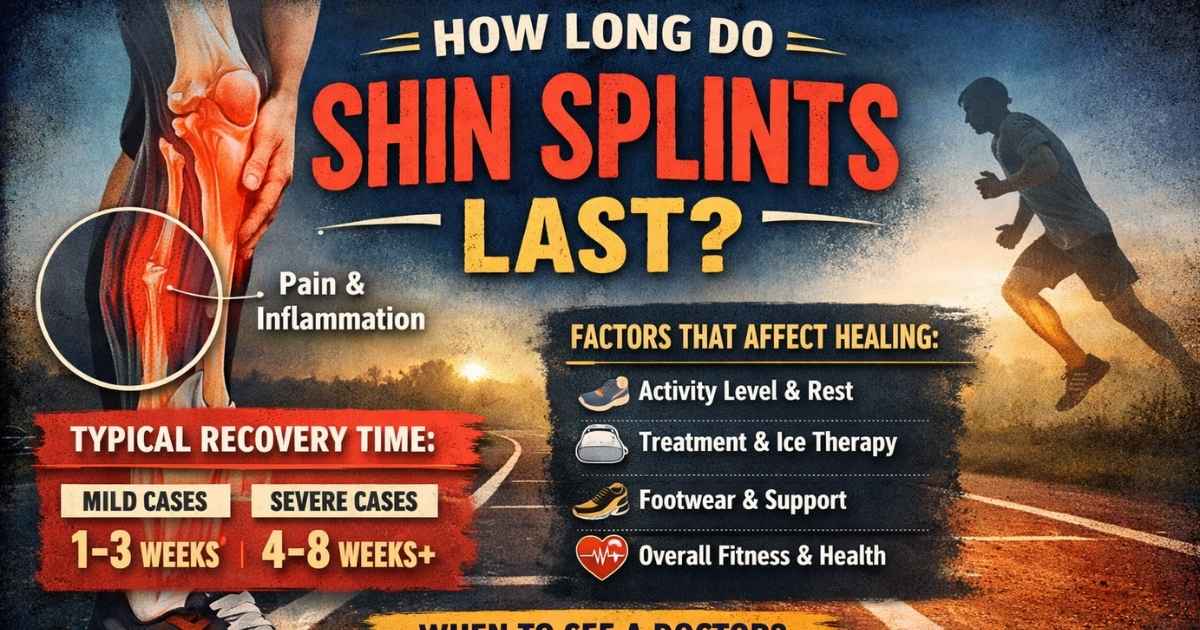
So, how long do shin splints last in real terms? The shin splints healing timeline varies based on severity, but there are general windows that give you a realistic picture. Most cases fall into one of three categories: mild, moderate, or severe.
Knowing which category you’re in helps you set the right expectations and choose the most effective recovery approach. Rushing back too early is one of the biggest reasons shin splints turn from a short-term problem into a chronic one.
Mild Shin Splints
Duration: 1–3 weeks
Mild cases involve occasional pain during activity that fades quickly with rest. The shin splints rest period here is relatively short — a week or two of reduced activity, combined with ice, gentle stretching, and better footwear, is often enough to resolve the issue. These cases usually result from minor overuse or a sudden but small change in training volume.
Moderate Shin Splints
Duration: 3–6 weeks
Moderate shin splints hurt more persistently — often at the start of a workout and lingering well after it ends. You might also feel some discomfort during everyday activities like walking up stairs. Recovery at this stage requires more structured shin splints treatment methods, including activity modification, targeted strengthening exercises, and possibly physical therapy.
Severe or Chronic Shin Splints
Duration: Several months
This is where things get serious. Severe or chronic shin splints can drag on for months if the underlying causes — poor biomechanics, training errors, or muscle imbalances — aren’t addressed. The tibia stress injury recovery process at this level often requires professional evaluation to rule out a stress fracture and to build a proper rehabilitation plan. Pushing through the pain here is never the right call.
How to Tell If It’s Shin Splints or Something Else
Not all shin pain is actually shin splints. Misdiagnosing the problem means treating the wrong condition — and that only delays your recovery. Shin splints diagnosis symptoms overlap with a few other conditions, so it’s worth knowing the differences.
A few key factors help distinguish shin splints from more serious issues. Pay attention to where the pain is, when it shows up, and how it responds to pressure.
Location of Pain
Shin splints typically cause a diffuse, spread-out ache along the inner edge of the shinbone. It’s not one sharp spot — it’s more of a broad zone of tenderness. A stress fracture, by contrast, produces very localized pain at a specific point on the bone.
Timing and Behavior of Pain
With shin splints, pain tends to flare up during activity and ease off with rest — at least early on. Stress fractures behave differently; the pain often worsens progressively and may even show up at night or while resting. If your shin hurts when you’re just sitting around, that’s a red flag worth taking seriously.
Response to Pressure
Pressing along the shin with shin splints produces tenderness across a wider area. A stress fracture creates intense, pinpoint pain when you press directly on the bone. Compartment syndrome adds other symptoms like numbness, tingling, or a tight, swollen feeling in the calf during or after exercise.
Red Flags
See a doctor promptly if you notice any of the following: sharp pain at rest, visible swelling or bruising on the shin, pain that’s been going on for more than six weeks without improvement, or any numbness or tingling in the lower leg. These signs suggest something more serious than a typical shin splints injury.
Effective Treatment & Recovery Strategies for Shin Splints
The most effective shin splints treatment at home combines rest, targeted movement, and smart lifestyle adjustments. There’s no single magic fix — recovery works best when you address the pain, the cause, and the return to activity all at once.
The goal isn’t just to stop hurting. It’s to come back stronger and less vulnerable to the same injury. Here’s how to do that.
R.I.C.E. (Rest, Ice, Compression, Elevation)
R.I.C.E. remains a practical starting point for lower leg inflammation treatment. Rest doesn’t mean doing nothing — it means swapping high-impact activities for low-impact ones like cycling or swimming. Ice the shin for 15–20 minutes two to three times a day, especially after activity. Compression sleeves and leg elevation can help manage swelling in more irritated cases.
Stretching & Strengthening Exercises
The best stretches for shin splints target the calves, Achilles tendon, and foot muscles. Calf stretches, toe raises, and heel drops are all highly effective shin splints rehabilitation exercises. Don’t neglect your hips and core either — stronger hips mean less compensatory strain on your lower legs. Consistency here is what separates people who recover once from people who stay recovered.
Footwear & Orthotics
Replacing worn-out shoes is one of the simplest and most impactful things you can do. Choose footwear that matches your foot type and the surface you train on. If you overpronate or have flat arches, custom orthotics can significantly reduce the biomechanical stress driving your shin pain.
Physical Therapy
Shin splints physical therapy treatment goes beyond basic exercises. A good physio will assess your gait, identify movement inefficiencies, and design a targeted program around your specific weaknesses. They can also use taping techniques to offload the tibia during the early recovery phase. For moderate to chronic cases, PT is often the difference between a two-month recovery and a six-month one.
Gradual Return to Activity
Shin splints recovery for beginners and seasoned athletes alike requires patience during the return phase. Don’t jump back to full training the moment pain disappears. Follow the 10% rule — increase your weekly mileage by no more than 10% at a time. Monitor your shin during and after every session and back off at the first sign of returning pain.
How Can You Stop Shin Splints from Coming Back?
Recovering from shin splints once is hard enough. Dealing with them repeatedly is demoralizing — and completely avoidable with the right habits. Prevention isn’t complicated, but it does require consistency.
The same factors that caused your shin splints in the first place are the ones that will bring them back if left unchecked. Here’s how to make sure that doesn’t happen.
Gradual Training Progression
Never increase your running volume or intensity too quickly. The 10% rule applies here too — slow, steady progression gives your bones and soft tissues time to adapt. Mix in cross-training days to reduce repetitive impact on the same structures.
Proper Warm-Up and Cool-Down
Start every session with dynamic movements — leg swings, ankle circles, light jogging — to get blood flowing and tissues primed. After your workout, spend time on static stretching for the calves, shins, and feet. Reducing shin pain after workouts is largely about how well you warm up and cool down.
Strengthening and Mobility Work
Make lower leg and hip strengthening a regular part of your training — not just something you do when you’re injured. Balance exercises, single-leg work, and foot strengthening drills all contribute to better shock absorption and more stable mechanics when you run.
Footwear and Surface Considerations
Rotate your shoes if you train frequently and replace them every 400–500 miles. Vary your running surfaces when possible — softer ground like grass or tracks reduces cumulative impact. Small adjustments in your gear and environment add up to significant protection over time.
When to Seek Medical or Specialist Care
Most shin splints resolve with conservative care, but some cases need professional attention. If your pain is severe, persistent, or accompanied by unusual symptoms, don’t wait it out and hope for the best. Knowing when to see a doctor for shin pain can prevent a manageable injury from becoming a serious one.
Early evaluation is especially important if you’ve been dealing with symptoms for more than six weeks or if you suspect a stress fracture. The sooner you get an accurate diagnosis, the sooner you can follow the right treatment path.
What Medical Evaluation Can Offer
A doctor or sports medicine specialist can rule out stress fractures, compartment syndrome, and tendon injuries through physical examination and imaging like X-rays or MRI scans. They can also refer you to a physical therapist and provide a personalized shin splints recovery plan based on your activity level and injury history. Getting that clarity early is always worth it.
Conclusion
How long do shin splints last? For most people, mild cases clear up in one to three weeks with rest and basic care. Moderate cases take three to six weeks and benefit from structured rehabilitation. Severe or chronic shin splints can linger for months — but only if the root causes go unaddressed.
The key takeaway is this: shin splints are manageable, but they reward patience. Rush back too soon and you’ll be right back where you started. Follow a smart recovery plan, fix what caused the problem in the first place, and build the strength and habits to keep them from coming back. Your shins will thank you for it.

Daniel Morgan is a health writer and wellness researcher dedicated to making evidence-based health information simple, practical, and actionable. With over six in health education and research, he specializes in translating complex medical topics into clear guidance readers can trust.