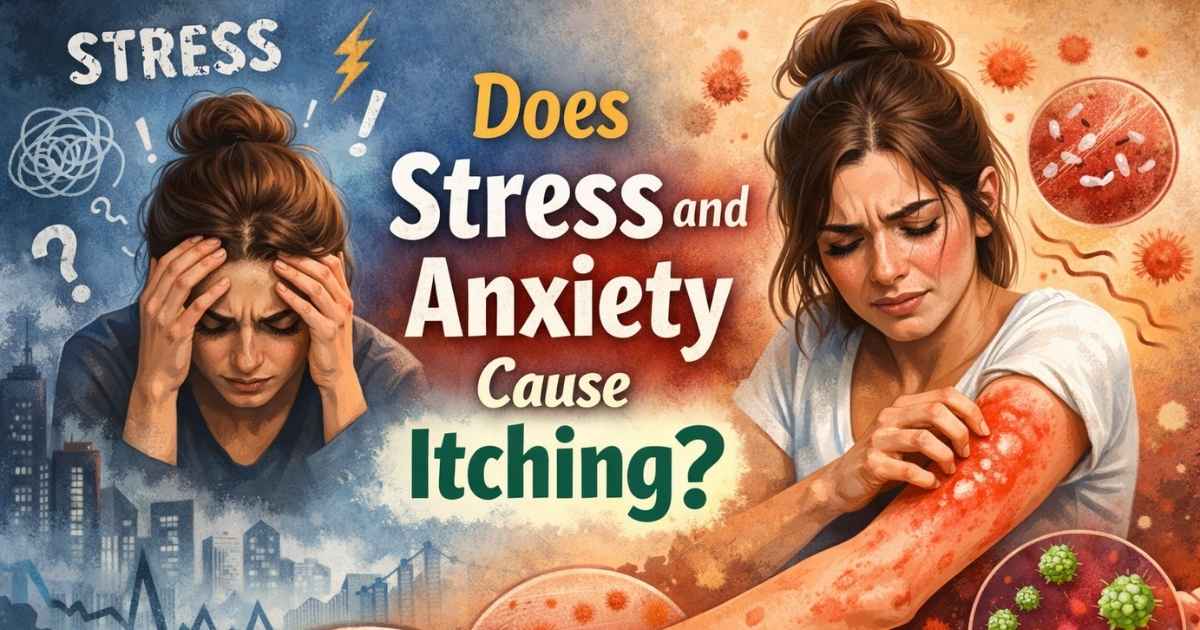
Have you ever noticed your skin itching during stressful moments? Many people experience this strange sensation. It can feel confusing when itching appears without a rash or allergy. Naturally you might start asking yourself if stress is the real cause.
Many doctors say the connection between mental health and skin health is stronger than most people think. In fact many people report itchy skin from anxiety during stressful life events. This raises an important question many readers ask online: does stress and anxiety cause itching? Understanding this connection can help you manage symptoms more effectively.
Related Post: Can Skinny People Have Diabetes?
The Link Between Stress, Anxiety, and Itching
Stress affects the body in many ways. When you feel anxious your brain releases stress hormones such as cortisol and adrenaline. These chemicals trigger reactions in the nervous system. Sometimes this reaction leads to Does Stress and Anxiety Cause Itching or itching sensations.
Scientists also highlight the connection between stress and itchy skin through the nervous system. Your skin contains thousands of nerve endings. When anxiety rises these nerves become more sensitive. This sensitivity can lead to stress related itching, especially during anxiety attacks or emotionally intense moments.
Psychological Factors that Contribute to Itching
The brain and skin communicate constantly. Dermatologists often call this the “mind–skin connection.” When your emotional state changes your body reacts. This explains why anxiety skin symptoms such as itching or irritation sometimes appear.
Psychological stress can also affect neuroreceptors in the brain. These receptors regulate signals sent to organs including the skin. When emotional stress disrupts these signals it may cause anxiety induced skin irritation or other stress induced skin problems. For some people this creates a cycle where anxiety triggers itching then itching increases anxiety.
Is Itching Always Caused by Stress and Anxiety?
Not every itch comes from stress. Skin irritation can appear for many reasons. Dry weather allergies insect bites or infections often cause itching too. Sometimes people mistake these conditions for itching caused by stress.
However emotional factors can still play a role. Some individuals experience itching without rash anxiety, which makes diagnosis harder. Doctors usually check for allergies skin diseases or other medical causes before linking symptoms to stress. Understanding psychological itching causes helps rule out other possible problems.
Anxiety, Stress, and Pre-existing Skin Conditions
People with existing skin conditions often notice worse symptoms during stressful periods. Doctors have observed this pattern in conditions like eczema psoriasis and lichen planus. Stress does not always create the disease. However it can trigger flare ups.
For example many patients report stress and eczema flare ups during difficult life events. Anxiety may increase stress induced inflammation which irritates sensitive skin. This is one reason experts study mental stress and skin inflammation closely when treating chronic skin conditions.
Diagnosing Anxiety/Stress Related Itching
Doctors first examine your medical history. They check for allergies infections or dermatological disorders. Blood tests may also reveal deficiencies or inflammatory markers. If these tests appear normal doctors may consider chronic itching and anxiety as a possible cause.
Healthcare providers also evaluate emotional health. They look for signs of stress affecting the skin and review lifestyle factors. In some cases physicians discover that the itching appears during panic attacks or emotional stress. At that point doctors may conclude that does stress and anxiety cause itching is not just a theory for that patient.
Tips for Managing Stress-Related Itching
If anxiety triggers your itching the solution often begins with stress management. Reducing emotional tension helps calm the nervous system. When stress hormones drop the skin usually becomes less reactive.
Here are several practical ways to manage symptoms:
- Practice deep breathing or meditation daily
- Maintain a regular sleep schedule
- Exercise to reduce stress hormones
- Use gentle moisturizers for skin protection
- Avoid excessive scratching
- Follow medical advice for anxiety related itching treatment
Learning how to manage stress induced itching often improves both mental and physical health.
When to Seek Professional Help
Occasional itching during stress is common. However persistent itching may signal a deeper problem. If symptoms last for weeks or interfere with daily life you should consult a doctor.
Medical professionals can determine what causes itching during anxiety or whether another condition is responsible. Dermatologists evaluate skin problems while mental health specialists treat anxiety disorders. Getting professional guidance helps you find the best treatment for anxiety related itching.
Conclusion
Stress affects more than your thoughts. It also influences your body including your skin. Many people experience irritation flare ups or itching during emotional stress. This happens because stress hormones and nerve signals affect the skin’s sensitivity.
Understanding the mind-body connection makes treatment easier. Managing anxiety improving lifestyle habits and seeking medical guidance can help break the cycle. If you’ve ever wondered does stress and anxiety cause itching, the answer is yes for many individuals though proper diagnosis remains essential.

Daniel Morgan is a health writer and wellness researcher dedicated to making evidence-based health information simple, practical, and actionable. With over six in health education and research, he specializes in translating complex medical topics into clear guidance readers can trust.