
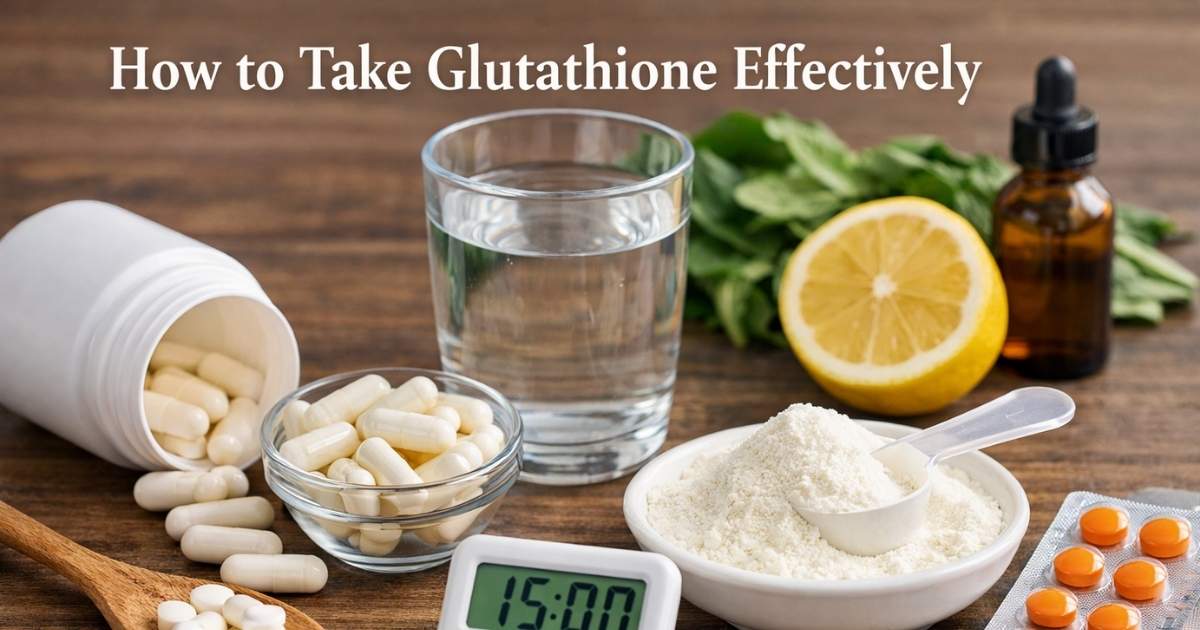
Many people buy glutathione supplements hoping to improve their skin, boost energy, or support detox. But they often take them without understanding the correct dose, timing, or supplement type. As a result, they don’t see the results they expected.
Learning how to take glutathione effectively can make a huge difference. The right form, proper dosage, and good absorption habits help your body use this powerful antioxidant better. In this guide, you’ll learn the best methods, helpful tips, and common mistakes to avoid when using glutathione supplements.
Related Post: How Vitamin D3 and K2 for Weight Loss | Support Your Fitness Goals
What Is Glutathione and Why Is It Important?
Glutathione is a powerful antioxidant produced naturally in your body. It plays a major role in protecting your cells from damage caused by free radicals. Pollution, stress, unhealthy diets, and aging can lower your glutathione levels over time. When that happens, your body may struggle to fight oxidative stress.
Because of its strong protective effects, many people use supplements to restore healthy levels. Glutathione provides several benefits, including glutathione antioxidant benefits, improved immune defense, and better detoxification support. It also helps with glutathione detoxification support, liver function, and overall wellness. Some people even take it for glutathione for anti aging and skin health.
Best Forms of Glutathione Supplements
When choosing a supplement, the form matters a lot. Different glutathione absorption methods affect how well your body can actually use it. Some types break down in the stomach, while others reach your bloodstream more efficiently.
If you’re wondering which glutathione form is most effective, it often depends on your goals and budget. The best glutathione supplement form should balance absorption, convenience, and safety. Below are the most common options.
Oral Glutathione
Oral glutathione comes in capsules or tablets that you swallow like a regular vitamin. It’s one of the most convenient ways to learn how to take glutathione supplements daily.
However, digestion can break down a large portion before it reaches your bloodstream. Because of this, some people feel the results are slower compared with other forms. Still, oral supplements remain popular due to their convenience and affordability when comparing glutathione tablets vs injections.
Liposomal Glutathione
Liposomal glutathione uses a special delivery system. The glutathione molecule is wrapped inside tiny fat bubbles called liposomes. These protect it from stomach acids and help it enter your bloodstream more easily.
Because of this design, many people report stronger liposomal glutathione benefits compared with standard capsules. In fact, some studies suggest liposomal formulas improve absorption significantly. This often answers the question many people ask: does liposomal glutathione absorb better?
Sublingual Glutathione
Sublingual glutathione comes in tablets that dissolve under your tongue. This method allows the nutrient to pass directly into the bloodstream through small blood vessels in your mouth.
Since it bypasses digestion, glutathione sublingual tablets can provide faster absorption than regular pills. Many health professionals recommend this option for people searching for practical and effective glutathione absorption methods without needing injections.
IV Glutathione
IV glutathione is administered directly into a vein through IV glutathione therapy at a clinic. Because it enters the bloodstream immediately, the body receives nearly 100% absorption.
This option is often used in medical settings for detox support or specific health concerns. Some people also choose it for quick glutathione injection benefits, though the treatment must always be performed by trained professionals. If you’re asking is IV glutathione better than pills, the answer usually depends on medical advice and personal health goals.
Best Practices for Taking Glutathione
Knowing how to take glutathione effectively isn’t just about the supplement form. Proper dosage and timing also play a major role in achieving good results.
Consistency matters more than anything else. Taking the supplement regularly helps your body maintain stable antioxidant levels and improves long-term benefits.
Recommended Dosage
The ideal glutathione supplement dosage varies depending on the type of supplement and your health goals. Most adults start with about 250–500 mg per day for oral or sublingual supplements.
For liposomal formulas, lower doses around 100–300 mg may work well due to better absorption. People using glutathione for skin health often ask about glutathione dosage for skin, which commonly falls within these same ranges. Still, it’s always best to start small and adjust based on how your body responds.
Best Time to Take Glutathione
Many experts recommend taking glutathione in the morning before eating. Glutathione absorption on empty stomach tends to be higher because there are fewer digestive barriers.
So if you’re wondering when should I take glutathione, the best time is usually 30 minutes before breakfast. Some people prefer taking it with light foods containing healthy fats, which may also support absorption.
How to Boost Absorption
Even the best supplement won’t work well if your body can’t absorb it properly. That’s why learning how to boost glutathione absorption is important.
One helpful strategy involves pairing supplements with supportive nutrients. For example:
- Vitamin C with glutathione may help regenerate antioxidants in the body
- Selenium supports the natural recycling of glutathione
- Milk thistle promotes glutathione for liver health
You should also avoid heavy meals when taking supplements. Many people ask, can glutathione be taken on an empty stomach? In most cases, yes—it actually improves absorption.
Food Sources of Glutathione
Supplements aren’t the only way to support glutathione levels. Several foods help increase glutathione levels naturally and support your body’s own production.
Common foods rich in glutathione include:
- Spinach
- Avocado
- Asparagus
- Garlic
- Broccoli
- Nuts and seeds
These foods supply the nutrients needed for natural ways to boost glutathione production. If you’re wondering what foods increase glutathione levels, adding these items to your daily diet can make a noticeable difference.
How Long Does It Take to See Results?
The timeline for results varies depending on the supplement form and your overall health. People using oral or sublingual supplements may start noticing improvements within 2–4 weeks.
Liposomal formulas sometimes work faster due to improved absorption. Meanwhile, IV treatments can deliver rapid effects within hours or days. Still, many people ask questions like how long does glutathione take to work or does glutathione work for skin. The truth is that results depend on consistent use and healthy lifestyle habits.
Common Mistakes to Avoid
Many people don’t see results because they unknowingly make simple mistakes. Avoiding these issues can help you get better results from your supplements.
Common mistakes include:
- Taking supplements with heavy meals
- Skipping doses regularly
- Using low-quality products
- Ignoring supportive nutrients
- Expecting instant results
Some people also wonder, can glutathione improve skin tone? It may support skin health, but results vary. Remember, supplements work best when combined with good nutrition and healthy habits.
Conclusion
Glutathione is one of the body’s most powerful antioxidants. It supports detoxification, immunity, skin health, and overall cellular protection. But taking it incorrectly can limit its benefits.
Understanding how to take glutathione effectively helps you choose the right form, dosage, and timing for better results. Whether you prefer oral supplements, liposomal formulas, or professional IV therapy, consistency and proper absorption strategies will make the biggest difference.

Daniel Morgan is a health writer and wellness researcher dedicated to making evidence-based health information simple, practical, and actionable. With over six in health education and research, he specializes in translating complex medical topics into clear guidance readers can trust.