
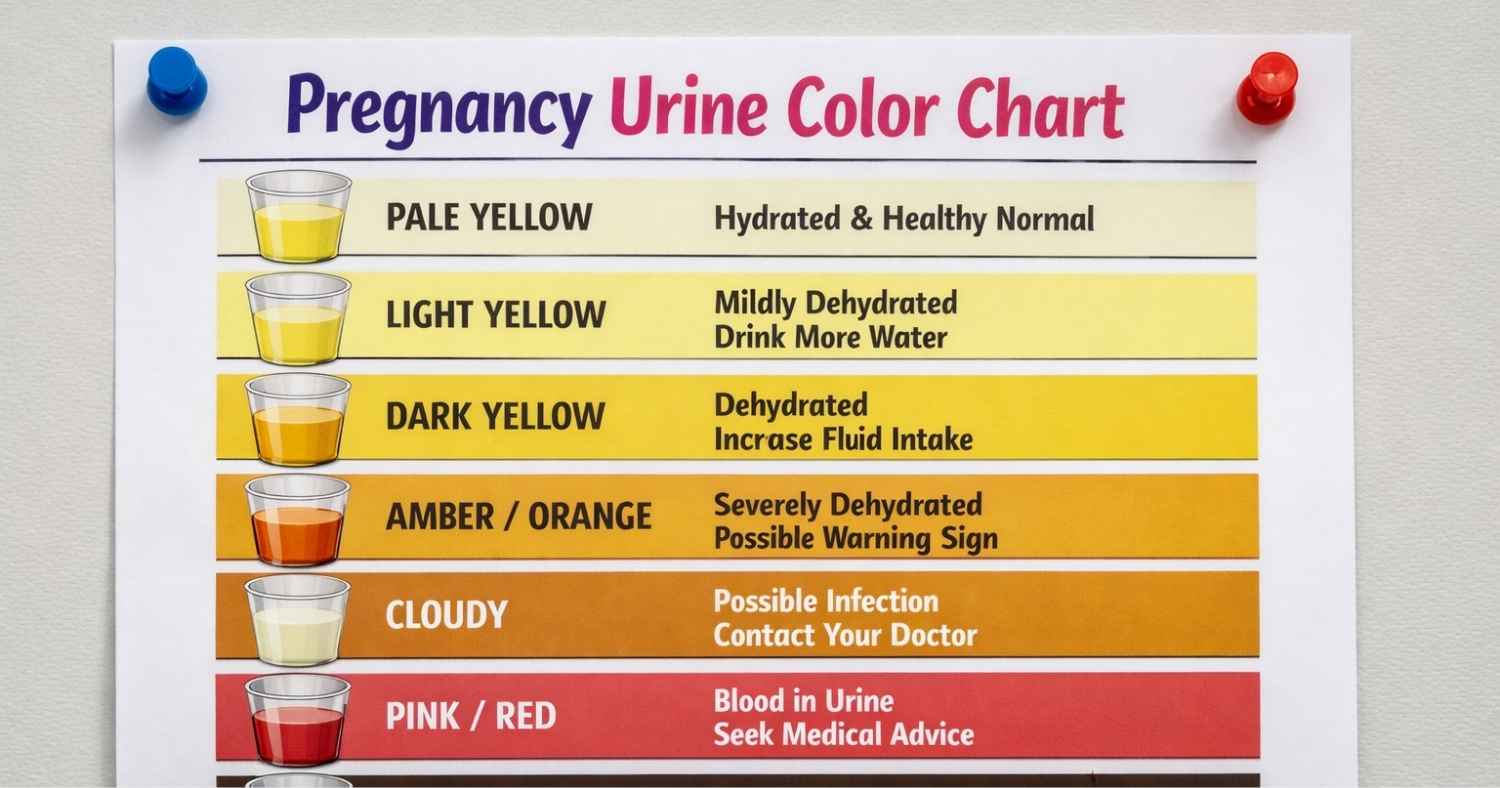
Pregnancy is an amazing journey filled with excitement and new experiences, but it also brings many changes to your body including the color of your urine. Understanding these changes can help you stay healthy and comfortable throughout your pregnancy. Urine color is influenced by hormones, hydration, diet, and medications. Observing these changes regularly helps you track your body’s needs and know when to consult a doctor.
Using a Pregnancy Urine Color Chart makes it easier to interpret urine color changes. By monitoring shades and patterns, you can quickly identify signs of dehydration, urinary tract infections, or other potential issues. This simple approach empowers you to take proactive steps for both your health and your baby’s wellbeing.
Related Post: Endometriosis Stage 4: Symptoms & Treatment Guids
Pregnancy and Urine Color
During pregnancy, hormonal fluctuations and increased fluid intake can cause noticeable variations in urine color. Progesterone and hCG hormones affect how your kidneys filter waste, sometimes making urine appear darker, especially during the first trimester. This is often normal and can reflect mild dehydration.
Early pregnancy signs such as frequent urination, nausea, or changes in urine odor may also be influenced by diet and prenatal vitamins. Recognizing what is normal helps differentiate harmless changes from warning signs, such as cloudy urine or unusual colors, which may indicate a urinary tract infection in pregnancy or kidney problems.
What Are the Changes in Early Pregnancy Urine Color?
In early pregnancy, urine color can change throughout the day depending on hydration, diet, and activity levels. Darker urine in the mornings is common and usually reflects concentration after overnight fasting. This is a normal physiological change, not usually a cause for concern.
Later in the day, drinking water and fluids lightens the urine. Foods, supplements, and physical activity can also influence color. Tracking these patterns helps you maintain hydration, avoid dehydration, and monitor early pregnancy urine color effectively, ensuring both your body and your baby are healthy.
In the mornings
Morning urine is typically darker, appearing honey-colored or amber. Concentrated urine is a normal sign of overnight dehydration and usually nothing to worry about, even if morning sickness or hyperemesis gravidarum is present.
It may also have a stronger odor, which is natural. Staying hydrated after waking helps reduce concentration and supports kidney function. Regular monitoring ensures that mild dehydration does not turn into a more serious issue.
Later in the day
Urine generally lightens as you drink water and other fluids throughout the day. Proper hydration supports your kidneys, helps prevent urinary tract infections, and maintains healthy urine color.
Pregnancy hydration tips, such as sipping water consistently and consuming hydrating foods, can help maintain normal urine color. Watching these changes also provides early insight into your overall health and well-being.
Other reasons why your urine color changes during pregnancy
Certain foods like beets, carrots, and blackberries can temporarily change urine color. Prenatal vitamins and medications may also influence the shade.
External factors such as hot weather, physical activity, and caffeine intake can concentrate urine. Monitoring your urine regularly helps detect potential urinary tract infections or dehydration early, allowing you to take timely action to protect your health.
Pregnancy Urine Color Chart
Here’s a guide to help you understand what different urine colors may indicate during pregnancy:
| Urine Color | Meaning |
| Clear | Over-hydrated; drink slightly less water |
| Pale Yellow | Normal and healthy; ideal hydration |
| Honey Yellow | Slightly concentrated; drink more fluids |
| Pale Orange | Possible medication effect |
| Dark Yellow | Mild dehydration; increase water intake |
| White or Opaque | Possible urinary tract infection |
| Dark Orange/Brown | Could indicate infection or liver/kidney issues |
| Rose, Green, Blue | Usually diet-related; review foods |
| Pink or Red | Possible infection or kidney stones |
| Milky | Bladder or kidney infection |
| Foamy/Bubbly | Proteinuria or high protein intake |
| Brown/Tea-Colored | Possible liver or gallbladder issues |
Using this pregnancy urine chart helps you track hydration, detect early infections, and maintain healthy kidney function throughout pregnancy. It’s a simple way to monitor your body’s signals effectively.
How does Pregnancy Change Urine Color?
Hormones like progesterone and hCG affect kidney function, urine production, and bladder fullness. Early in pregnancy, these hormonal changes often make urine appear darker and more concentrated, especially during the first trimester.
Nausea and vomiting can worsen dehydration, intensifying urine color and odor. During the second trimester, urine may lighten as kidney efficiency improves. In the third trimester, increased blood volume and pressure from the growing uterus can again concentrate urine. Understanding these patterns is crucial for early pregnancy urine color monitoring and hydration management.
What is a Normal Urine Colour during Pregnancy?
Normal urine color during pregnancy ranges from pale yellow to light amber. Pale yellow generally indicates proper hydration, while slightly darker shades suggest mild dehydration that can be corrected by drinking fluids.
Some harmless variations, like rose, green, or blue urine, are usually caused by foods or vitamins. Monitoring urine regularly helps you recognize early pregnancy signs, maintain kidney health, and respond promptly to any concerning changes. Hydration and nutrition play key roles in maintaining healthy urine color.
When Should You Be Concerned about Urine Color?
Some urine color changes may indicate medical issues. Light orange, dark orange, brown, or black urine could signal infections, liver, or kidney problems.
Cloudy, milky, or foamy urine may indicate urinary tract infections, proteinuria, or bladder issues. If these changes persist, especially with pain, fever, or unusual odor, it’s important to consult a doctor to ensure timely diagnosis and treatment.
When to Consult a Doctor?
Seek medical attention if your urine contains blood, greenish tints, or remains dark despite hydration. Cloudy urine, strong odors, or lower back pain are also warning signs that require evaluation.
Your healthcare provider can perform urine tests, assess kidney and liver function, and recommend treatment if necessary. Early consultation helps prevent complications and ensures both you and your baby stay healthy throughout pregnancy.
Do Supplements Impact Changes in Urine Color?
Prenatal vitamins and supplements can change urine color. B vitamins may turn urine bright yellow or greenish, while iron supplements can cause reddish-brown urine. These changes are generally harmless.
However, unusual colors or persistent dark tones should be checked by a doctor. Rose or green urine reasons are often dietary, but persistent changes may signal other issues. Monitoring urine color ensures safe use of supplements during pregnancy.
What are the Preventive Measures to Avoid the Risk of UTIs?
Urinary tract infections are common in pregnancy. Preventive measures include drinking plenty of water, eating nutrient-rich foods, urinating regularly, and practicing good hygiene.
Wearing breathable clothing and following your doctor’s advice for supplements also reduces risk. Pregnancy urine color monitoring can help detect early signs of infection, allowing prompt action to protect both mother and baby.
Conclusion
Monitoring your urine color is a simple and effective way to track health during pregnancy. Changes from pale yellow to honey-colored urine are generally normal, while unusual shades may indicate potential issues.
By staying hydrated, taking prenatal vitamins responsibly, maintaining hygiene, and consulting your doctor when necessary, you can ensure a safe and healthy pregnancy. Listening to your body helps you care for both yourself and your growing baby.

Daniel Morgan is a health writer and wellness researcher dedicated to making evidence-based health information simple, practical, and actionable. With over six in health education and research, he specializes in translating complex medical topics into clear guidance readers can trust.